

A patient leaves the pharmacy with three prescriptions, two different dosing schedules, and a bottle label printed in a font small enough to strain anyone's eyes. Within a week, doses get missed. Within a month, the treatment plan has quietly fallen apart, not because the medicine failed, but because the packaging never told the patient what to do with it in a way they could actually follow. That gap between prescribing and taking is where personalized medication packaging earns its place.
We think about packaging differently than most people expect. Packaging is not just a container, but a communication tool, and when it's built around a patient's real routine rather than a generic template, it becomes part of the treatment itself. We've written before about how color-coded medication packaging helps patients sort complex regimens at a glance, and personalization takes that same logic further by tailoring format, labeling, and timing cues to the person rather than the population average.
At HCPC Europe, we work with pharmaceutical manufacturers, packaging designers, and healthcare practitioners across Europe who are trying to close this exact gap. Half of patients with chronic diseases do not take their medication as prescribed, and this absenteeism costs Europe an estimated 100 billion euros per year in unnecessary hospital admissions. Personalized packaging design is one of the few interventions that touches the patient at the exact moment they decide whether to take a dose, and that makes it worth taking seriously.
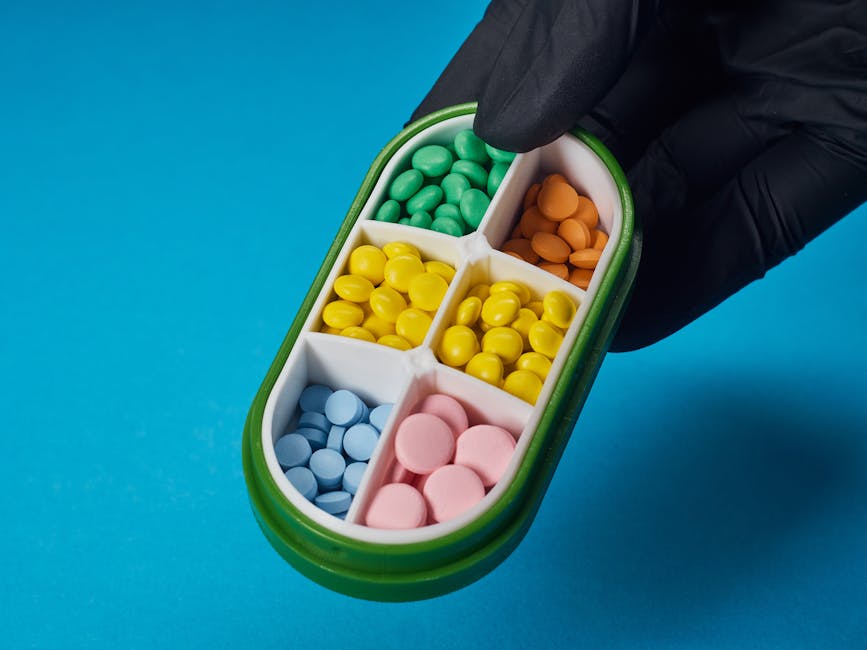
What Is Medication Compliance Packaging?
Medication compliance packaging is any packaging format designed specifically to help patients take the right dose, at the right time, for the right duration, by organizing doses visually and physically around a treatment schedule rather than around manufacturing convenience. It includes calendarized blister packs, multi-dose pouches, and smart labeling systems built to reduce confusion.
The concept itself is not new. Blister packs with printed days of the week have existed for decades. What's changed is the depth of personalization available now. According to the World Health Organization, adherence interventions can have a greater effect on population health than improvements in the underlying medical treatments themselves, which reframes packaging from an afterthought into a clinical variable (WHO, patient safety). Compliance packaging is where that principle gets translated into something a patient can physically hold and understand.
"Increasing the effectiveness of adherence interventions may have a far greater impact on the health of the population than any improvement in specific medical treatments."
How Personalized Packaging Actually Works
Personalized packaging works by encoding the treatment plan directly into the object the patient interacts with, so the packaging itself carries instructions the patient would otherwise have to remember on their own. Instead of a bottle with a printed label the patient has to interpret and translate into a daily habit, a personalized pack already reflects that habit in its structure.
In practice, this means matching format to the patient's actual routine. A patient managing a complex regimen of five medications benefits from a multi-compartment system organized by time of day, while a patient on a single once-daily therapy may need nothing more than a clearly dated calendar blister. We covered the tradeoffs between these two approaches in our comparison of pre-filled versus multi-compartment blister packs, and the short version is that neither format wins universally. The right choice depends on regimen complexity, patient cognition, and how much support a caregiver or pharmacist can provide when the pack is filled. Research indexed through the National Library of Medicine has repeatedly linked packaging design changes to measurable improvements in dosing accuracy, particularly among older adults managing multiple prescriptions (PubMed).
When compliance-enhancing packaging design is done well, it also gives caregivers and pharmacists a visual audit trail. A missed compartment is obvious at a glance, in a way a half-empty pill bottle simply isn't.
What Are the Different Types of Compliance Packaging?
The main types of compliance packaging are calendarized blister packs, multi-dose pouch systems, pre-filled organizers, smart packaging with digital reminders, and unit-dose hospital packaging, each suited to a different combination of regimen complexity and patient independence. Manufacturers increasingly combine two or more of these formats for patients on layered treatment plans.
- Calendar blister packs, printed with days and dates so a patient can see at a glance whether today's dose has been taken
- Multi-dose pouch systems that group several medications into a single time-stamped sachet
- Pre-filled pill organizers, often refillable weekly by a caregiver or pharmacist
- Smart packaging with embedded sensors or Bluetooth-enabled reminders
- Unit-dose packaging used in hospital and long-term care settings for administration accuracy
- Tamper-evident seals layered onto any of the above formats to protect against contamination and misuse
- Child-resistant but senior-friendly closures balancing two competing safety needs
Tamper-evidence deserves its own mention here, since patient trust in a package often starts with whether it looks intact and safe. We explored that relationship directly in our piece on tamper-evident packaging and patient trust, and the data there reinforces something we see repeatedly in award submissions: patients associate visible security features with a manufacturer that takes their safety seriously, which in turn supports willingness to continue a treatment.

What Elements Matter in Designing Packaging for a Product?
The elements that matter most in compliance-focused packaging design are legibility, ergonomics, dosing clarity, portability, and color or symbol coding, because each one addresses a distinct barrier a patient faces between opening the package and correctly taking the dose inside. Getting one element right rarely compensates for failure in another.
Legibility sounds obvious until you consider the population actually using the packaging. Many chronic disease patients are older adults, and font size, contrast, and printing placement determine whether instructions are usable rather than just present. Ergonomics matters just as much. A blister pack that a healthy twenty-five-year-old opens in one motion can be genuinely difficult for a patient with arthritis or reduced grip strength. We go deeper on this in our guide to ergonomic packaging design for patients with limited hand dexterity, and the design principles there apply directly to any personalization effort, since a personalized pack that a patient physically can't open has failed regardless of how well the schedule was mapped.
Portability and dosing clarity round out the list. A patient managing medication outside the home, at work or while traveling, needs a format that survives a bag or pocket without doses spilling or losing their labeling. In our practice reviewing award submissions each year, the packages that score highest are rarely the most technologically advanced. They're the ones that solve a specific, well-understood patient problem without adding unnecessary complexity.
What Are the Requirements for Medicine Packaging?
Medicine packaging in Europe must meet requirements covering child-resistance, tamper-evidence, accurate labeling, batch traceability, and information for the patient, typically governed by national medicines agencies working within EU pharmaceutical legislation. Personalized formats have to satisfy these baseline requirements before any compliance-enhancing features are added on top.
This is where regulatory reality and design ambition have to meet in the middle. A calendar blister pack still needs full batch and expiry information. A multi-dose pouch still needs to identify each medication inside it clearly enough for a pharmacist, caregiver, or emergency responder to verify contents quickly. We break down how labeling holds up under these constraints, especially for patients on five or more medications, in our guide to packaging labeling best practices for complex treatment regimens. The takeaway that carries across most jurisdictions is that regulatory compliance and patient-friendly design are not competing goals. The best submissions we see treat them as the same design problem.
Who Personalized Packaging Is Right For, and Where It Isn't the Answer
Personalized packaging tends to deliver the largest gains for patients managing multiple chronic medications, older adults with cognitive or dexterity challenges, and anyone transitioning off a hospital stay into self-managed care at home. These are the populations where the gap between prescribed treatment and actual behavior is widest, and where a well-designed pack closes that gap fastest.
It's worth being honest about where personalized packaging is not the right tool. A patient on a single, stable, once-daily medication with a strong existing routine may see little added benefit from a complex multi-compartment system, and in some cases added complexity can actually introduce confusion rather than remove it. Digital reminder apps and pharmacist-led medication reviews are reasonable alternatives or complements, particularly for patients who are comfortable with a smartphone but resistant to changing their existing pill bottle habits. Compliance packaging works best as one part of a broader adherence strategy, not a substitute for patient education or clinical follow-up.
What Results Look Like: A Realistic Timeline
Packaging changes don't produce instant transformation, and we'd caution against any claim that suggests otherwise. What we typically see, drawing on award-winning implementations we've reviewed over the years, is a gradual pattern: modest improvement in the first few weeks as patients adjust to a new format, followed by more measurable adherence gains over two to three months as the new routine solidifies.
The health outcomes tied to sustained adherence are well documented. The European Society of Cardiology has linked consistent medication-taking to meaningfully reduced cardiovascular risk, and we cover that research in detail in our piece on the European Society of Cardiology study on packaging's impact on medication-taking. Broader public health data points the same direction: the Centers for Disease Control and Prevention notes that poor medication adherence contributes substantially to preventable hospitalizations among patients with chronic disease.
"Poor medication adherence is a significant problem, particularly among people with chronic conditions, and is associated with worse health outcomes and higher healthcare costs."
Turning that knowledge into action is the whole point of packaging-based intervention. Better outcomes for patients and healthcare systems don't come from the medication alone. They come from patients actually taking it, on schedule, for as long as the treatment requires.

Practical Tips for Building Compliance Into Packaging Design
For manufacturers and packaging designers evaluating a personalization project, a few practical habits separate the submissions that actually move adherence from the ones that only look good on a shelf.
- Start with the patient population's specific barriers, whether that's dexterity, vision, cognitive load, or routine complexity, rather than defaulting to a generic template
- Test physical prototypes with real patients from the target group, not just internal staff, before finalizing a format
- Keep dosing information visible on the pack itself, not solely on an insert that gets discarded
- Coordinate labeling design early with regulatory teams so compliance requirements shape the design instead of constraining it late
- Pilot new formats with pharmacists and caregivers who fill or dispense the packaging, since their friction becomes the patient's friction
- Measure adherence data after launch wherever possible, rather than assuming the redesign worked
Facilitating the use of packaging solutions across an entire treatment pathway, not just at the point of dispensing, is what separates a genuinely patient-centered design from a cosmetic update. Renato Lemay has written elsewhere on this site about how award-winning packaging teams treat these decisions as clinical ones, not purely aesthetic ones, and that mindset is exactly what personalization requires.
Personalized medication packaging won't fix every adherence problem on its own, and it shouldn't be sold that way. But for the millions of European patients juggling multiple prescriptions, uncertain schedules, and packaging that was never built with them in mind, a design built around their actual routine can be the difference between a treatment plan that works on paper and one that works in practice. If you're evaluating a packaging redesign, start with the patient's daily reality, not the production line, and the compliance gains tend to follow.