

When one migraine prescription becomes three medications
A patient with chronic migraines fills three prescriptions in one week. The first is a triptan, designed to stop the acute attack. The second is an antiemetic, because nausea and vomiting precede the pain in most migraine episodes and block the triptan's absorption. The third is an SSRI, prescribed daily to manage the anxiety and depression that surface after years of unpredictable pain. Three prescriptions, three separate pharmacy visits, three bottles on the shelf at home, each with its own label, its own schedule, its own refill cycle.
Today's packaging is built per product, one stock keeping unit and one label per medication. The burden of coordinating three schedules falls entirely on the patient. Tuesday morning: the SSRI. Wednesday evening: nothing, wait for the next migraine. Friday afternoon: the triptan hits, now take the antiemetic, but in what order, and should they have been taken together at home or started only when the pain breaks through? The pharmacy label says one thing, the prescriber's notes say another, and the patient, exhausted by migraine itself, fills the gap by guessing.
Combination therapy packaging does not merge these drugs into one pill. Regulators do not allow that without a new drug approval process. Instead, it redesigns the container and layout so a multi-drug regimen reads as one coordinated schedule instead of three unrelated instructions. The triptan and antiemetic sit in the same card for the same time slot, labeled together. The SSRI occupies its own row, one cell per day, visually separate and clearly daily. Packaging is not just a container, but a communication tool that says: this is your full regimen, this is how it fits together, and here is exactly what to take, when, and why.
"Roughly half of patients with chronic disease do not take medication as prescribed. This non-adherence is linked to substantial avoidable healthcare costs across Europe each year."
That statistic drives everything we do at HCPC Europe. Half of patients with chronic disease do not follow their regimen. Half. The cost to European healthcare systems is in the billions each year, measured in preventable readmissions, escalated complications, and foregone treatment gains. When we help packaging designers move from one-product-at-a-time to regimen-centered design, we are not adding complexity. We are removing the burden that patients carry alone.
How packaging design coordinates a multi-drug regimen without merging the drugs
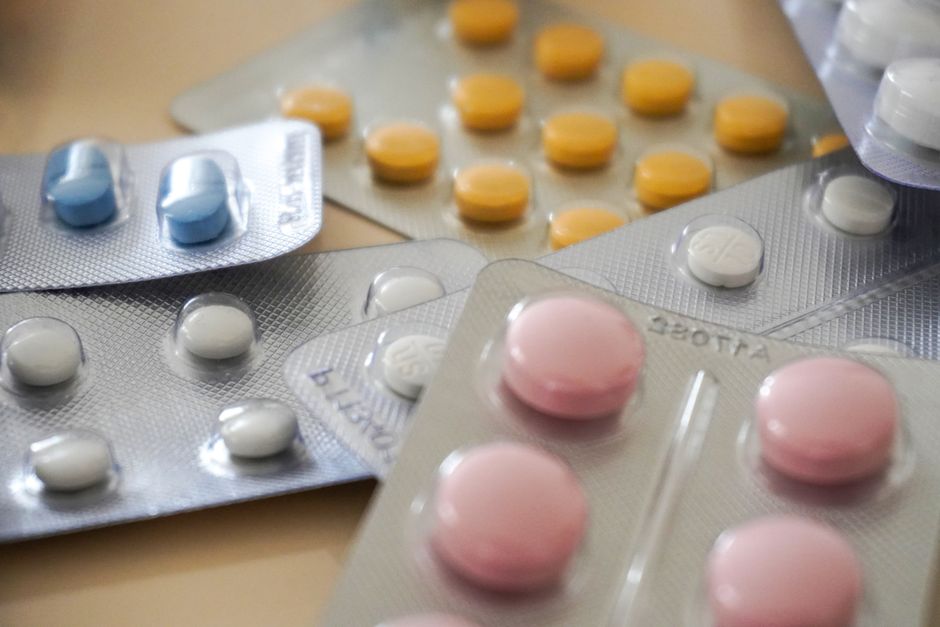
Two main formats handle combination therapy at the packaging level. The first is the multi-compartment blister card, where each cell holds one tablet and one dose for a specific day and time slot. A weekly organizer might have seven rows (Monday through Sunday) and four columns (morning, midday, evening, bedtime). Every cell is pre-filled, and every cell is printed with the drug name, strength, and a photo-real image of the tablet rather than relying on patient memory or color coding alone.
The second format is the multi-dose pouch, a sealed sachet that groups a patient's full dose set for one time point. These are common in European hospital dispensing and in elderly-care settings, where a pharmacist or care assistant assembles the pouches at the point of care. Each pouch might contain the morning dose of a statin, the midday dose of an SSRI, and the evening dose of an NSAID, all sealed together and labeled with the date, time, and patient name. The pouch is opened only when it is time to take that set of medications.
When we recommend multi-compartment blister packs for home use, here is the concrete layout we start with: a grid organized by day (rows) and time-of-day (columns), with each cell printed with drug name, strength, and image. A patient on the migraine regimen sees the triptan and antiemetic side by side on Friday, labeled as an acute-dose pair. The SSRI occupies its own row, one cell per day for Monday through Sunday. The visual logic is immediate: this is daily, this is as-needed, this is what goes together.
Regulators allow this because each medication keeps its own marketing authorization and lot traceability. The packaging coordinates presentation and timing; it does not create a new combined drug product. The manufacturer of the triptan ships their product to a contract packager, who receives the SSRI and antiemetic from their suppliers, inspects all three for lot code and expiration, and then assembles the multi-compartment card according to the prescription's specifications. Every drug is tracked individually. Every expiration date is honored. Every lot remains traceable to its source.
Here is the decision rule we use: a regimen with more than three distinct medications or more than two daily dosing times outperforms plain bottles when moved to a calendarized multi-compartment format. Below that threshold, adherence gains are modest and the packaging cost premium may not be justified. Above it, the visual coordination and compartment structure drive measurable improvements in both adherence and safety.
Can multiple medications be combined into one package?
Yes, for presentation. No, for formulation. Regulators do not allow separately authorized products to be merged into a single dosage form without a new combination-drug approval, which takes years and significant investment. When we talk about combining medications in one package, we mean a shared card or shared calendar, not a single merged pill. That boundary is important and non-negotiable.
The reason is chemistry. Some tablets are photosensitive: certain SSRIs and antipsychotics degrade under visible light, and their packaging must use opaque or amber-colored foil to block wavelengths that would break them down. Other tablets are moisture-sensitive: they need a desiccant packet inside the compartment to absorb any water vapor that could cause hydrolysis. A third class of drugs is temperature-sensitive and requires cold storage. If we put all three drugs in one uniform blister card with one foil type and one level of desiccant, the photosensitive drug gets exposed to light, or the moisture-sensitive drug absorbs water, and the medication degrades before the patient ever takes it.
So the design rule is this: each compartment gets its own barrier properties based on that specific drug's stability needs. The triptan and antiemetic might share one foil thickness because they have similar stability profiles. The SSRI gets a darker compartment with additional protection. According to the FDA, solid oral dosage forms carry individual light, temperature, and moisture stability requirements that packaging must preserve through the product's shelf life. A multi-compartment card must honor every one of those requirements or it becomes a liability, not a solution.
There is one real exception to the packaging-only rule: true fixed-dose combination tablets. Some antihypertensive-statin combinations, for instance, are approved as single drug products, with both active ingredients in one tablet manufactured and tested as a unified entity. These are true combinations at the formulation level. But when a prescriber writes a triptan, an antiemetic, and an SSRI, those are three separate drugs. Packaging-level combination means they travel together and are presented together, but they never merge into one tablet.
Why do migraine medications often come with a second or third prescription?
The pattern is rooted in migraine physiology. The acute treatment is a triptan or a newer CGRP-targeted drug, designed to reverse the mechanism of the migraine itself. But according to the Mayo Clinic, nausea and vomiting occur in a large majority of migraine attacks. The nausea often arrives before the headache peaks, and it can block the patient's ability to swallow an oral triptan or reduce its absorption. So the prescriber adds an antiemetic like metoclopramide or ondansetron, given at the same time as the triptan, to protect the triptan's delivery into the bloodstream.
The comorbidity pattern is equally common. Chronic migraine patients show measurably higher rates of depression and anxiety than the general population. The unpredictability of the pain, the lost work days, the social withdrawal, the fear of the next attack all accumulate into genuine psychiatric disease, not just understandable stress. So the prescriber adds an SSRI or other antidepressant as a daily preventive. It may also reduce migraine frequency directly, a benefit independent of its effect on mood. Either way, the SSRI sits alongside the acute medications as a permanent part of the regimen.
The packaging implication is immediate: because the triptan and antiemetic are as-needed and the SSRI is daily, the design must visually separate PRN compartments from daily ones. A patient should never look at the card and wonder whether today's SSRI is a one-time dose or a continuing medication. The grid layout handles this naturally: SSRI in one row, visible seven cells across (Monday through Sunday). Triptan and antiemetic in a separate section, labeled "take as needed" or marked with a different color background, physically separated from the daily column.
Which chronic conditions rely most on multi-medication packaging
Migraine is one pattern. But many high-stakes regimens benefit from packaging that treats the full combination as one coordinated plan. Rheumatoid arthritis is another: RA patients often take a weekly dose of methotrexate, a daily NSAID, and increasingly a biologic on its own multi-week cycle. Three different frequencies, and a single weekly organizer cannot represent all three without a calendar-based design that shows both recurring daily doses and less-frequent milestone doses. The biologic injection arrives in its own pen or pre-filled syringe, but the packaging guidance should connect it visually and temporally to the oral regimen.
Type 2 diabetes patients on a weekly GLP-1 injectable alongside a daily oral statin need packaging that bridges an injectable pen's own tracking needs with an oral daily calendar. Two different formats exist at home, but they are part of one therapeutic plan. A designed card or organizer system that coordinates both tells the patient: pen on Friday evening, daily statin Monday through Sunday, and here is how they work together in your treatment.
Several chronic conditions stand out as especially suitable for combination packaging:
- Rheumatoid arthritis: weekly methotrexate, daily NSAID, multi-week biologic injection
- Type 2 diabetes: weekly GLP-1 injectable plus daily oral statin
- Cardiovascular disease: statin plus erectile dysfunction medication requiring interaction monitoring
- Schizoaffective disorder: antipsychotic plus mood stabilizer or adjunctive medication
Cardiovascular patients commonly prescribed a statin together with an ED medication need interaction and timing guidance visible on the packaging itself, not buried in a separate leaflet. Some ED medications can interact with nitrates if the patient ever needs acute angina relief, so the statin-ED package needs to surface that warning at every dose point, not assume the patient has read and retained a separate instruction sheet.
Patients with schizoaffective disorder treated with an antipsychotic plus a mood stabilizer or adjunctive medication carry the highest relapse risk from missed doses. A single missed antipsychotic dose can precipitate a psychotic episode within days. When we recommend personalized medication packaging for these regimens, the design priority is highest because the cost of non-adherence is most severe. A calendarized multi-compartment card becomes not just a convenience but a critical safety tool.

Does combining medications in one package increase the risk of mix-ups?
It is a legitimate concern. When four or five different tablets sit in adjacent compartments on the same card, look-alike shapes and colors raise the chance a patient pushes out the wrong cell. The risk grows with each medication added. A patient in a hurry, or a patient with poor vision, or an elderly patient with mild cognitive impairment, might open the Friday afternoon cell meant for the triptan and antiemetic pairing, but grab only one tablet when two are needed, or push out the wrong one entirely.
The concrete mitigation is redundant identification. Print drug name, strength, and a photo-real pill image directly on or next to each compartment, not just a day label. Some cards use a color background, but we do not rely on color alone because roughly 8% of men and 0.5% of women have red-green colorblindness. Under poor lighting, color coding becomes useless. Printed text and image are visible in any light.
Here is the design rule we recommend: any card holding four or more distinct medications should use redundant identification (text plus image plus position). The text should include drug name and strength, not just a generic label like "PM" or "as needed." The image should match the actual tablet the patient will see when they look inside the compartment. The position should follow a consistent grid so the patient learns the layout and knows at a glance what should be there. According to the NIH, medication errors and adverse events increase with the number of concurrently prescribed drugs, supporting redundant identification in multi-drug packaging design.
Add traceability. A serialized, lot-coded compartment lets a pharmacist or caregiver verify after the fact which product occupied a given cell. If a patient takes a dose and has an unexpected side effect, or if there is a product recall and the pharmacist needs to check what the patient actually received, a lot-traceable card provides an answer. A plain pill organizer, which many patients use to transfer their medications from separate bottles, offers no traceability at all.
Design principles that make combination packaging work
We distill the rules we have learned into four core design decisions:
- Grid layout rule. Organize by day (rows) and time-of-day (columns) using one fixed grid across the entire regimen so patients learn a single pattern instead of a different layout per product.
- Redundant identification. Pair every compartment with drug name, strength, and image, never color alone, to protect patients with colorblindness or low vision.
- Barrier-matched compartments. Specify foil, desiccant, or opacity per compartment based on each drug's individual stability needs rather than one uniform material for the whole card.
- Opening-force calibration and PRN-versus-daily separation. Balance child-resistant requirements against grip strength for patients managing five or more medications, and visually distinguish as-needed compartments from fixed daily ones.
Let us expand on the opening-force issue because it is often overlooked. Child-resistant packaging is mandated for many drugs, and the standard child-resistant blister requires significant thumb force to push a tablet through the foil. That force is designed to prevent accidental ingestion by toddlers. But an elderly patient with arthritis or reduced hand strength may struggle to open the compartment without pain or risk of dropping the entire card. The designer must balance both requirements: child-resistant enough to meet regulations, but accessible enough that the intended patient can actually take their medication without assistance.

The PRN-versus-daily separation is equally critical. A patient should never have to decide whether a medication is one-time or ongoing based on its position on the card. Use a visual boundary: a separate section of the card for as-needed doses, marked clearly. Use text labels: "Take one dose as needed for migraine, up to twice weekly" printed directly on the PRN section. Use a different cell design if possible: slightly raised compartments for daily doses, recessed compartments for PRN, so the patient's hand knows the difference before they even look.
What should manufacturers and health systems expect before scaling combination packaging?
Start with evidence. Combination packaging should be validated with adherence and outcome data through randomized controlled trials before broad rollout, not adopted purely on design appeal. We work with institutions that run these trials and measure real changes in medication taking, hospitalizations, and clinical outcomes. The data matters because it justifies the cost premium and informs which patient populations benefit most.
Tie cost to the savings. The multi-material blister cards and custom printing raise the unit packaging cost, sometimes by 30% to 50% compared to a standard three-bottle dispensing. But we know from the WHO statistic above: non-adherence costs Europe hundreds of billions per year in avoidable readmissions and complications. Even modest adherence gains translate into measurable system savings. A 10% improvement in adherence for a single patient with chronic RA might prevent one hospital admission per year, saving the health system 5,000 to 10,000 euros. That easily covers years of premium packaging.
Start with high-risk populations. A universal format for all medications is not the goal. Instead, prioritize regimens where non-adherence carries the highest cost or risk: schizoaffective polypharmacy, RA with biologic therapy, heart-failure patients on triple therapy. Prove the model in these populations first, measure the outcomes, then expand to lower-risk groups once the evidence base grows and manufacturing scales down costs.
Expect policy to evolve. Procurement and reimbursement criteria should reward packaging formats backed by adherence evidence, the same way device and drug reimbursement already require outcome data. We are not there yet in most European healthcare systems, but as randomized controlled trial findings on adherence packaging accumulate, policymakers will begin to ask: why are we still paying the same price for packaging that lets patients fail to take their medications correctly?
"Medication non-adherence accounts for a significant, quantifiable share of medication-related hospital admissions, a figure widely used to build the economic case for adherence-focused packaging investment."
Packaging becomes part of the treatment plan, not an afterthought
The next time you design or prescribe a migraine regimen, a psychiatric regimen, or a cardiovascular regimen that combines multiple medications on different schedules, treat the regimen as the design brief, not the individual product. The packaging should coordinate all three drugs into one visual and temporal plan. Triptan and antiemetic side by side for the acute attack. SSRI in its own daily row. All three drugs on the same card so the patient sees them as one system, guided by the right dose, the right time, the right duration.
Align your packaging teams with prescribers early. The moment a pattern like triptan-antiemetic-SSRI is common enough to standardize across your patient population or your health system, involve the packaging designer. Do not wait until dozens of patients have already missed doses because they did not understand how the three prescriptions fit together. Early alignment turns repetitive design problems into one solved problem that works for all patients with that regimen.
We collaborate across the healthcare, industry, and policy sectors at HCPC Europe to turn packaging-based innovation into practice. The design principles above are not theories; they come from working with manufacturers, pharmacists, prescribers, and patients to build cards that genuinely improve adherence and safety. When you are ready to pilot a combination packaging format for your own patient population, we are here to help translate evidence into action.